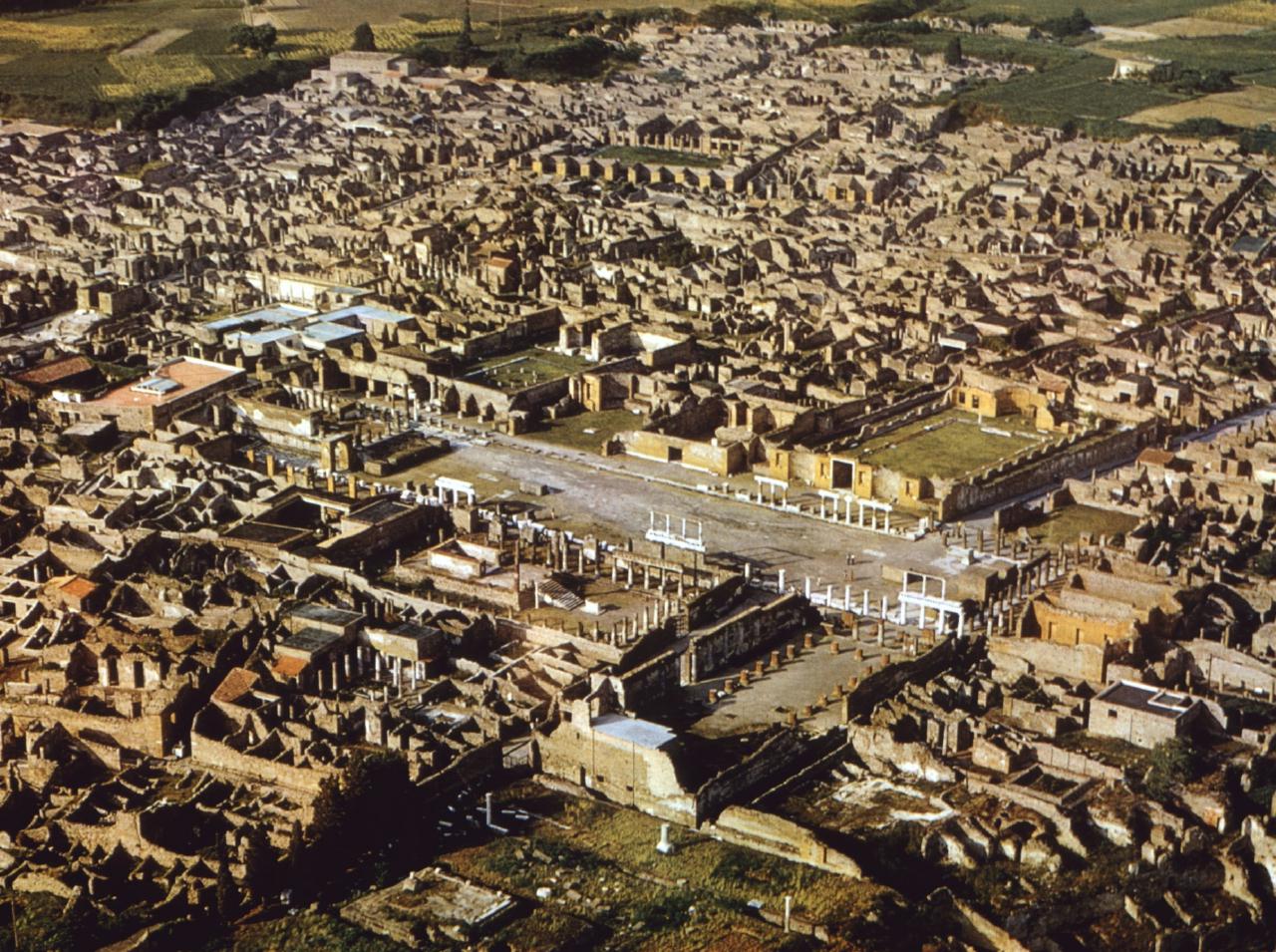
 Pompeii was a town/city in Ancient Rome; it is located near modern Naples. This town was believed to be founded in the 6th or 7th century and was captured by the Romans in 80 BC- it was destroyed 160 years later. What was so interesting to me is all of the detail and time that was put into this city. It had a complex water system, gymnasium, and amphitheater; there are still places today that do not have complex water systems. This city was lost for about 1500 years and was later discovered in 1599. I found it very interesting how dead bodies were preserved; plaster was used to fill the voids, therefore you are able to see the exact position the person was in when they died. Today Pompeii is one of the most popular tourist attractions of Italy with around 2.5 million visitors each year.
 Favorite Architecture, Furniture, and Interior Design

 One of my favorite pieces from the Pompeii era is this table. The reason that I find it to be so interesting is the great detail that was put into it. Just from this picture, you can see how intricate and detailed this table its; there entire structure is covered with details. This table is made of bronze which makes it extremely luxurious and gives it an expensive look and feel. Another piece of Pompeii history that I found to be interesting was this glass. Glass blowing is a complicated process and the detail and precision that is seen in these pieces are truly extraordinary. The color that the artists were able to achieve in these pieces are truly remarkable.
Current Applications

 Both of the pieces shown were created by artists who were inspired by Pompeii design and techniques that were commonly seen in this "world". Although the two pieces shown are totally different (one is a book shelf and the other is a piece of modern artwork) you can see many things that these pieces have in common and how they were influenced by Pompeii. The piece of art was put together through a mosaic technique. The book shelf also has a mosaic feel; because of the way that the shelves are placed.
Extra Resources
Below is a link to a video about the people "frozen in time" in Pompeii; this refers to those who died.
Student Responses
After looking at Melanie's blog, I got a lot of great information on how Pompeii was destroyed (I did not find much information about this in my research). The eruption of Mt. Vesuvius took place in 79 CE and it was basically untouched until 1748. After it was discovered, people started to study and learn much more about the history and life that took place in this city. People actually found bread baking in the ovens; this is something I found to be very interesting and a little creepy.
Rachael's blog introduced the four main styles for wall paintings and architectural effects. The first style resembled marble and it involved stucco walls. The second style that Rachael discussed emphasized paintings of columns and various architectural details. The third style had many intricate details and the fourth style had panoramic scenes painted on the walls.
Rachael's blog introduced the four main styles for wall paintings and architectural effects. The first style resembled marble and it involved stucco walls. The second style that Rachael discussed emphasized paintings of columns and various architectural details. The third style had many intricate details and the fourth style had panoramic scenes painted on the walls.

No comments:
Post a Comment